Lao PDR Builds National Tiger-Tracking System to Combat Wildlife Trafficking
Government survey records 436 captive tigers across six facilities as authorities strengthen identification, population control and law-enforcement safeguards
VIENTIANE, Lao PDR — The Government of the Lao People’s Democratic Republic, working with Save Elephant Foundation, has recorded 436 captive tigers across six facilities as part of a national effort to strengthen population management and prevent tigers and their parts from entering transnational illegal trade.
The initiative, underway since August 2024, combines veterinary care, sterilization, microchipping, DNA sampling and centralized record-keeping. Its aim is straightforward but demanding: every captive tiger must have a verifiable identity and remain traceable throughout its life.
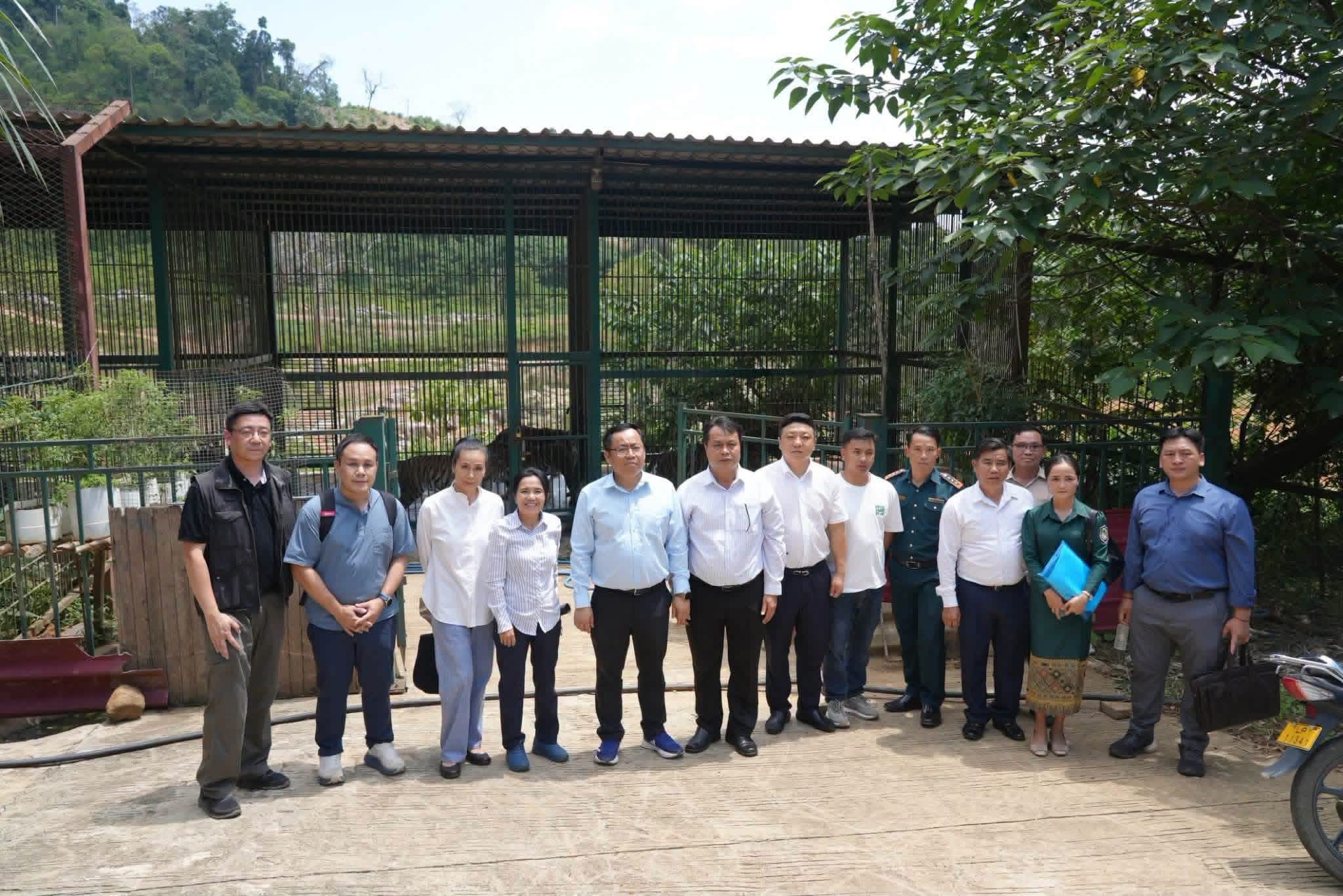
Project records by June 2026 show substantial differences among the six surveyed facilities. Vannaseng holds 149 tigers, while Akhom-Laos International Zoo holds 146. Golden Triangle Zoo has 51 tigers, Kammuan Zoo 32, Say Nam Theun Resort Zoo 31 and Tad Tham Pha Zoo 27.
Together, these facilities account for the country’s currently recorded captive population of 436 tigers.
The survey represents an important step toward replacing fragmented records with an integrated population-management system. Each tiger’s file is intended to include its microchip number, sex, estimated age, identifying characteristics, location, health history and reproductive status. Births, deaths and movements between authorized locations are also to be documented.
DNA samples provide an additional layer of verification. Genetic profiles can help confirm an animal’s identity and biological relationships, while potentially assisting investigators when the origin of a tiger—or suspected tiger parts—comes into question.
These controls address a persistent weakness in the management of captive wildlife: animals that appear without a documented origin, or disappear without a credible explanation, may be difficult to distinguish from those entering or leaving facilities illegally.
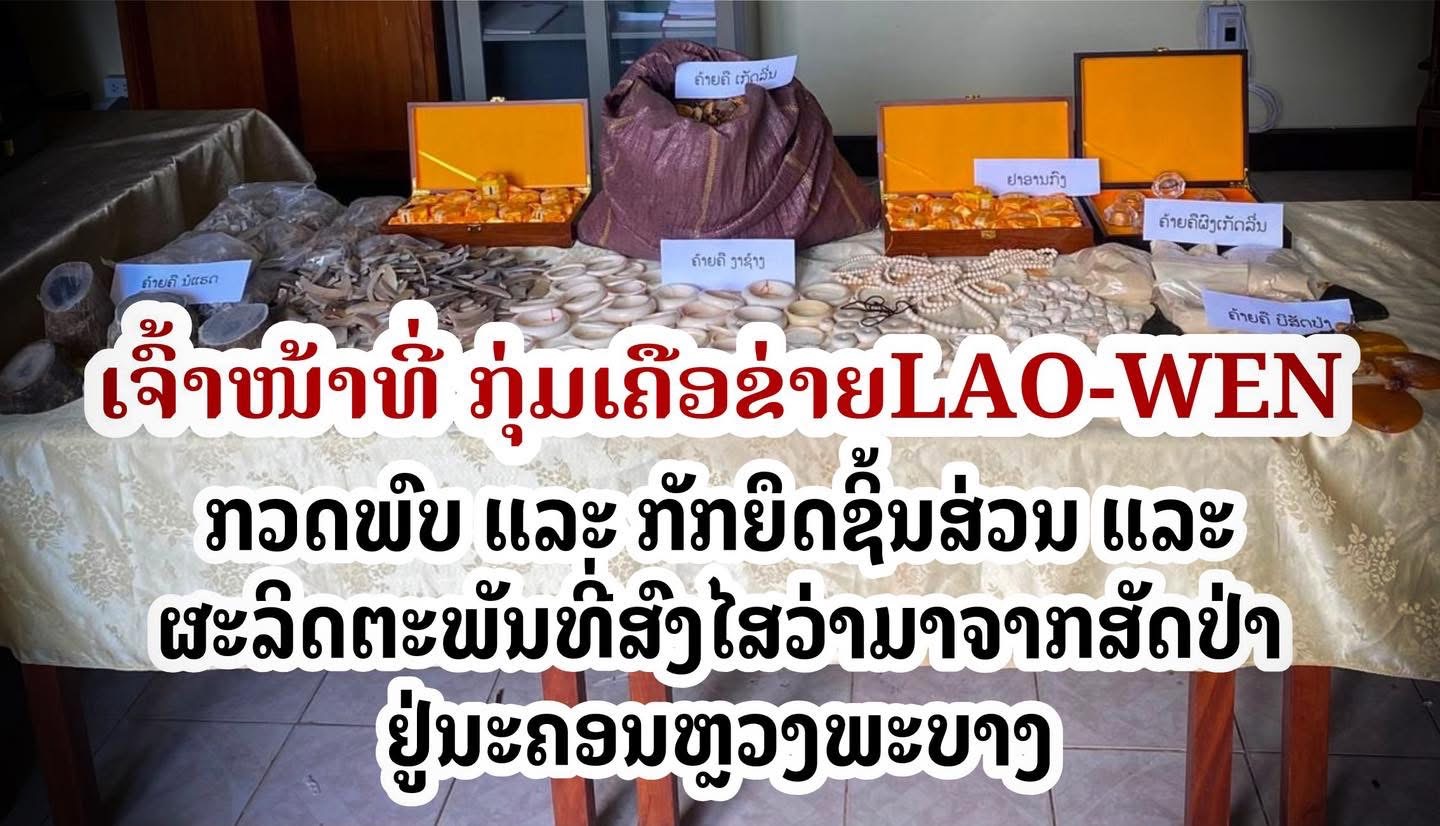
International investigations, including reporting by the Wildlife Justice Commission, have documented criminal networks moving live tigers and products such as bones, skins and teeth across Southeast Asia. Lao PDR, Thailand and Viet Nam have appeared in investigations involving source, transit and consumer markets.
Tigers (Panthera tigris) are listed in Appendix I of the Convention on International Trade in Endangered Species of Wild Fauna and Flora, or CITES. The listing affords the species the Convention’s highest level of protection and prohibits international commercial trade except under narrowly defined circumstances.
Against that backdrop, Lao authorities and Save Elephant Foundation have sought to ensure that captive populations cannot expand without control or be used to conceal the origin of illegally obtained animals.
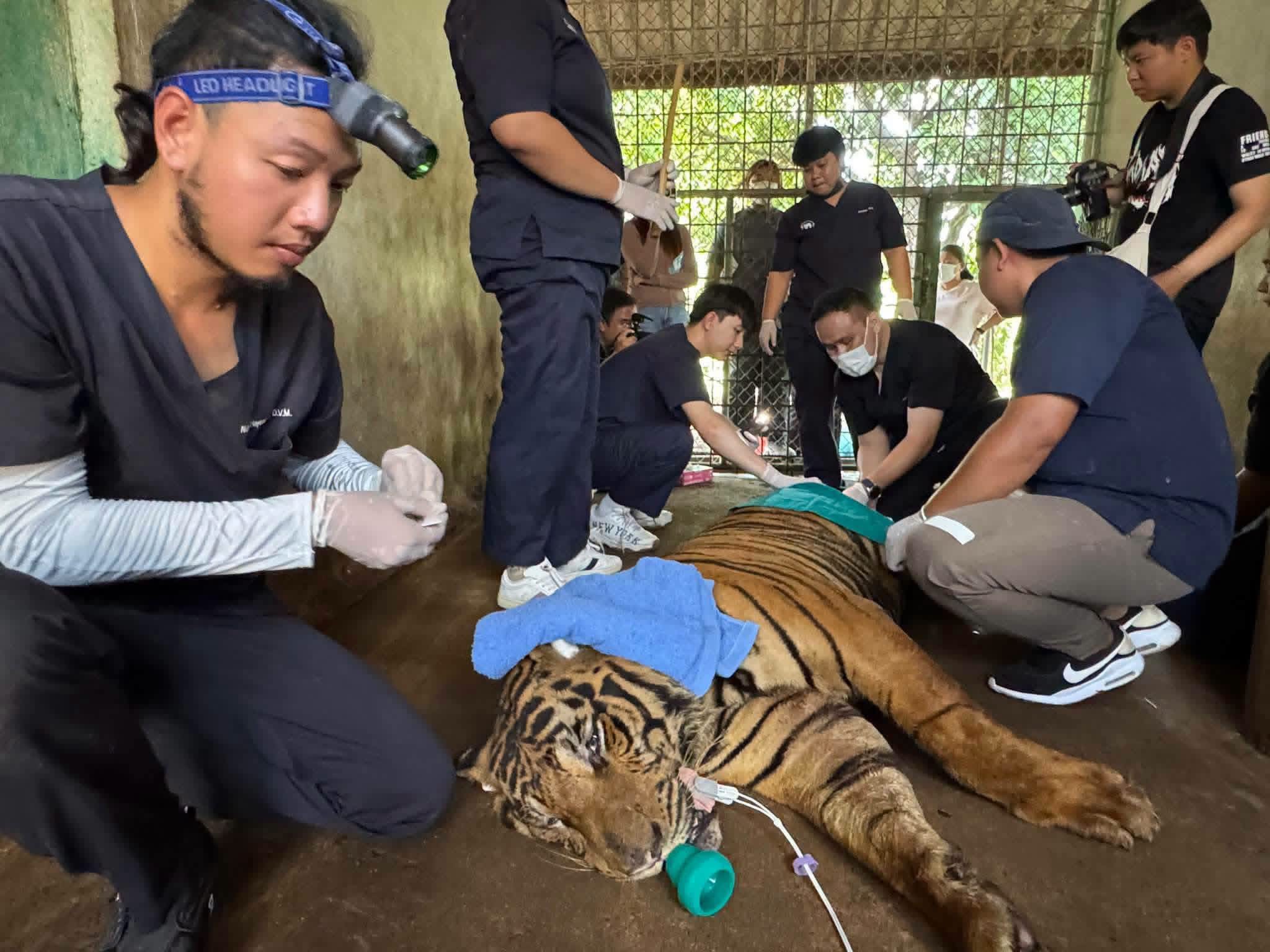
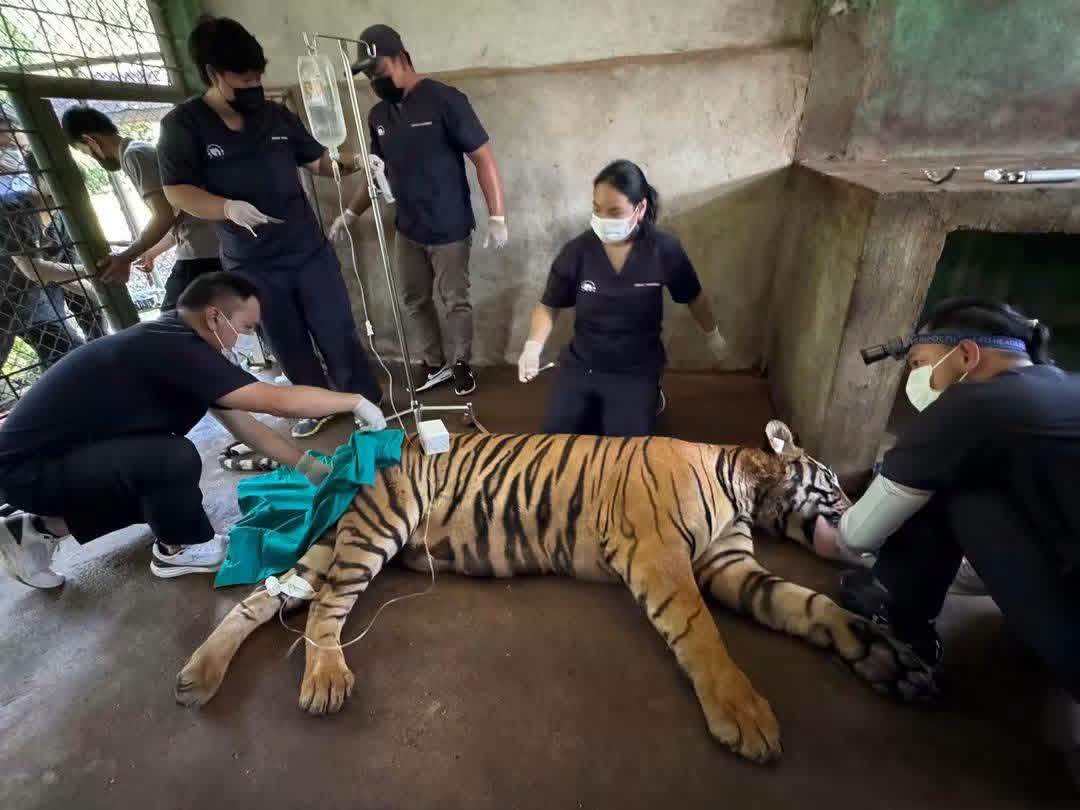
Veterinary teams have now surveyed and assessed tigers at all six identified facilities. Their work has included health examinations, microchip implantation, DNA collection, sterilization procedures and the preparation of individual records.
Sterilization is being accompanied by the separation of males and females where appropriate. The measures are intended to prevent unplanned breeding, keep captive populations at manageable levels and reduce the creation of surplus animals vulnerable to illegal trade.
But officials and project partners emphasize that sterilization alone cannot provide effective control. The central challenge is maintaining a reliable system that records every birth, death, transfer and change in location.
Under such a system, an animal appearing without registered parents or another lawful origin would trigger scrutiny. A registered tiger that could no longer be located would likewise require investigation.
“Protecting tigers does not begin only when an animal is intercepted at a border,” said Saengduean Lek Chailert, founder of Save Elephant Foundation. “It begins with knowing where every tiger is, where it came from and whether it remains within the registered system.”
The cooperation builds on the foundation’s earlier support for elephant identification, microchipping and database development in Lao PDR. Both initiatives apply the same principle: individually identifiable animals, backed by transparent and verifiable records, are considerably harder to conceal within illegal supply chains.
The completion of the nationwide survey marks the end of an important initial phase, but the effectiveness of the system will depend on continuous updating, institutional oversight and regular verification at each facility.
The resulting information is expected to support captive-population management, CITES implementation and law-enforcement investigations. It may also strengthen cooperation with neighboring countries in cases involving cross-border movements or suspected wildlife trafficking.
For Lao PDR, the register offers more than a population count. It creates a baseline against which every future birth, death, transfer and disappearance can be assessed.
When every tiger has an identity and a traceable history, the space available for traffickers to exploit becomes smaller—and intervention can begin before an animal becomes a commodity in the illegal wildlife trade.